



Signs To Replace Gutters During Roof Replacement
When planning a new roof, it is wise to check the gutter system too. Damaged gutters can affect roof edge drainage and allow water runoff to harm fascia boards, drip edge areas, siding, and the foundation.
At RJM Best Roofing Inc, we look at the full roof line so homeowners can make a safer choice. Knowing when to replace gutters during roof replacement can prevent leaks, rot, and costly repairs later.
Healthy Gutters Help Your Roof Last Longer
Clean gutters guide rain away from the roof edge, walls, and foundation. As a result, shingles stay drier, fascia boards face less moisture, and the drip edge can move water into the gutter path as planned.
When gutter condition is ignored, small drainage problems can spread fast. Leaves, dirt, and loose sections can block water runoff, which may lead to stains, wood damage, and early roof wear.
Clear Warning Signs Your Gutters Need Attention
Before any roof project begins, it helps to inspect the gutters closely. Cracks, dents, rust, and sagging areas often show that the system may not protect the home well after new shingles are installed.
Water spilling over the gutter sides during rain
Gaps between gutters and fascia boards
Peeling paint, dark stains, or soft wood near the roof edge
Rust spots, loose hangers, or separated joints
These signs can point to poor gutter condition. Therefore, it may be better to replace gutters during roof replacement instead of attaching old gutters to a new roof system.
How Bad Gutters Can Damage Roof Edges
Faulty gutters can push water back toward shingles and wood trim. Over time, poor roof edge drainage may weaken fascia boards, loosen the drip edge, and create wet spots where mold or rot can grow.
Our team at RJM Best Roofing Inc checks these areas because roof edges often show damage first. For related roof planning, homeowners can review our roof replacement service details.
Best Timing For Gutters And Roof Work Together
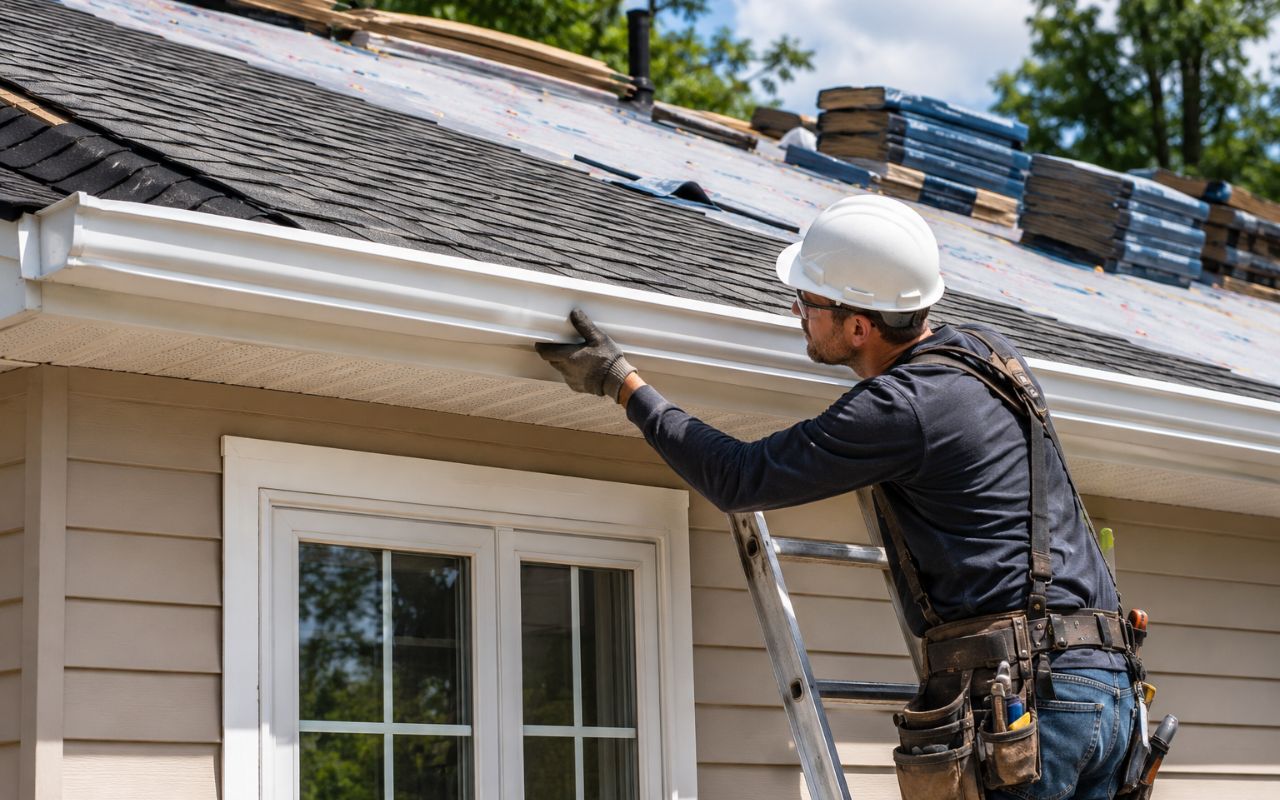
Planning both jobs together makes the work smoother. Roofers can reach the drip edge, fascia boards, and old fasteners more easily when shingles and gutter parts are already being removed.
Less risk of damaging new shingles later
Better fit between gutters and the roof edge
Cleaner water runoff from the first rainfall
Easier inspection of hidden wood damage
This timing is one reason many homeowners replace gutters during roof replacement. In addition, it helps the new roof and drainage system work as one complete barrier.
Choosing Gutter Materials That Match Your Home
The right gutter material depends on your home, weather, and budget goals. Aluminum is common because it is light and resists rust, while steel is strong but needs good coating care.
Vinyl can work for some homes, though cold weather may cause cracks over time. Before choosing, check flow needs, gutter shape, and how much water runoff your roof must handle during storms.
Professional Installation Protects Every Roofline Detail
Gutter work may look simple, but the slope, fasteners, seams, and downspouts must be set correctly. A poor angle can send water toward the home instead of away from it.
Secure fastening into sound fascia boards
Proper slope for steady roof edge drainage
Clean connection near the drip edge
Downspout placement that moves water safely away
With RJM Best Roofing Inc, our team explains the safest next step before work begins. For snow and seasonal care tips, visit our guide on protecting gutters during snowy weather.
Frequently Asked Questions
Should I replace gutters during roof replacement?
Yes, it is often a smart choice when gutters are cracked, loose, rusty, or pulling from the home. Replacing them together helps protect the new roof edge from water problems.
Can old gutters stay after a new roof?
Old gutters can stay if they are strong, straight, and draining well. However, weak gutters may damage the new roof, fascia boards, and drip edge after installation.
What gutter condition means replacement is needed?
Major rust, sagging, leaks, open seams, and water stains near the roofline are warning signs. These problems can stop proper water runoff and lead to larger repairs.
Why does the drip edge matter for gutters?
The drip edge helps guide rain from the roof into the gutters. If it is bent, loose, or blocked, water may reach wood parts and cause damage.
Who can inspect my roof and gutters?
When customers contact RJM Best Roofing Inc, we review the roofline and explain clear options. You can use our contact pageto request help.
Long Term Care Keeps New Gutters Working
After installation, simple care helps the gutter system last longer. Clear leaves, check seams, and watch for overflow during heavy rain, especially in fall and after strong storms.
Gutter guards may reduce clogs, but they still need checks. When you replace gutters during roof replacement and maintain them well, your roof, siding, and foundation stay safer from water damage.
