



Roof Flashing During Roof Replacement In New Rochelle Essentials
Roof flashing during roof replacement in New Rochelle protects the spots where water often enters first. These areas include walls, chimneys, edges, and valleys. When flashing is placed well, rain and melting snow move away from your home instead of slipping under the shingles.
At RJM Best Roofing Inc, we focus on clear planning before any roof work begins. Therefore, our team checks each flashing point, explains what should be replaced, and helps homeowners feel confident before the project starts.
Flashing Matters During New Rochelle Roof Projects
Roof flashing during roof replacement in New Rochelle is not a small detail. It is a key part of leak prevention because it covers weak joints where roofing materials meet walls, vents, chimneys, and roof valleys.
Because New Rochelle weather can bring rain, snow, and sudden temperature changes, flashing must guide water the right way. For a deeper look at full roof work, visit our New Rochelle roof replacement service page.
Step Flashing Protects Walls From Hidden Water Leaks
Step flashing is placed where a roof meets a vertical wall or chimney side. Each small metal piece overlaps the next one, so water keeps moving down instead of entering behind the shingles.
During roof flashing during roof replacement in New Rochelle, this detail must line up with each shingle row. As a result, the wall joint gets steady protection during storms.
Each piece should overlap the one below it.
The metal should sit flat against the wall area.
Damaged pieces should be replaced, not reused.
Chimney Flashing Keeps Moisture Away From Masonry Joints
Chimney flashing seals the space where the chimney meets the roof. This area often faces heavy water flow, so it needs strong protection from the base to the upper edge.
With RJM Best Roofing Inc, our team checks base flashing, counter flashing, and nearby shingles together. This helps reduce moisture around the chimney and protects the attic, ceiling, and masonry from slow water damage.
Drip Edge Support For Cleaner Roof Water Runoff
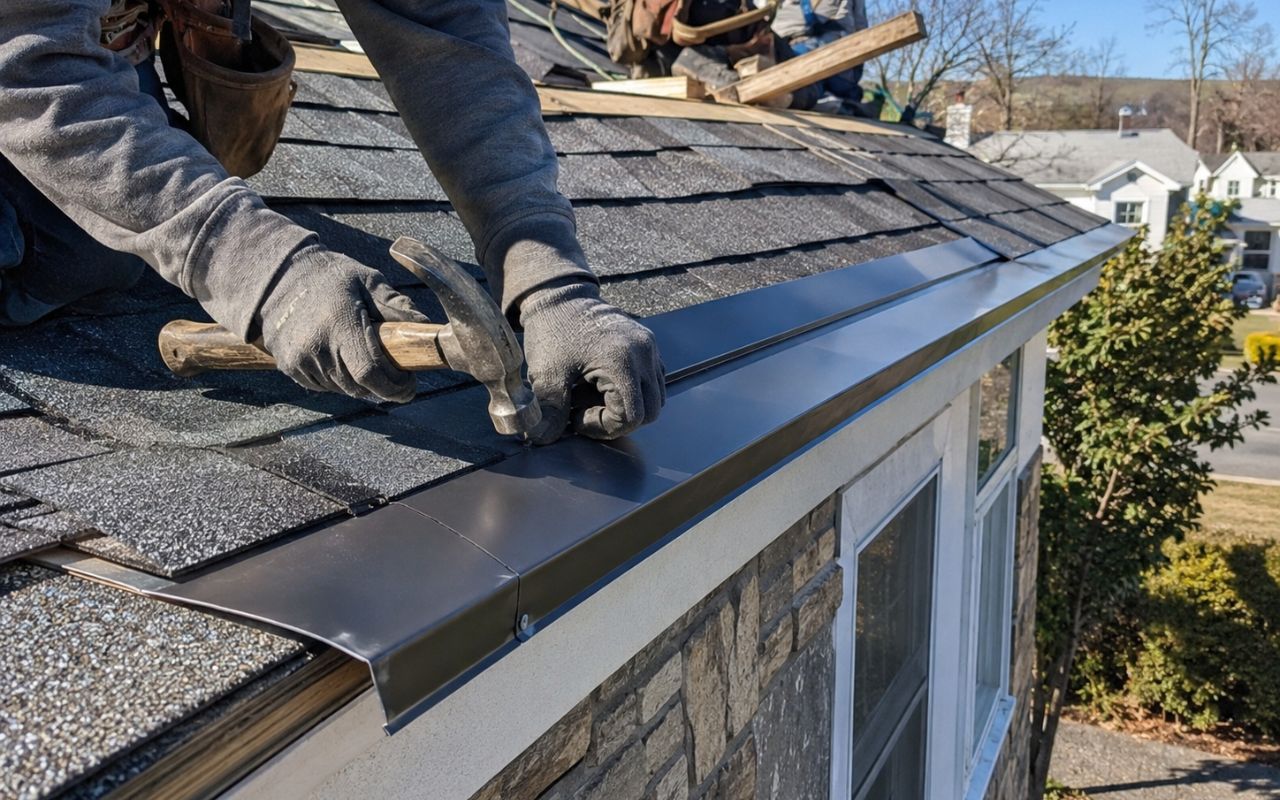
A drip edge is the metal strip along roof edges. It helps move water into the gutters and away from fascia boards, soffits, and the roof deck.
When roof flashing during roof replacement in New Rochelle includes a solid drip edge, the roof edge has better leak prevention. In addition, it helps shingles stay supported along the outer border.
It directs rainwater toward the gutter system.
Helps protect wood edges from rot.
Supports cleaner lines along the roof edge.
Roof Valleys Need Careful Sealing Before Shingles
Roof valleys carry a large amount of water because two roof planes meet there. For that reason, valley flashing must be straight, smooth, and sealed before shingles cover the area.
Poor valley work can send water under the roofing system. However, proper valley flashing, step flashing, and a drip edge work together to help keep the home dry during hard weather.
Flashing Mistakes That Can Lead To Interior Damage
Small flashing mistakes can create large repair needs later. For example, short pieces, wrong overlaps, loose nails, and cracked sealant can let water reach insulation, drywall, and wood framing.
Before we complete roof flashing during roof replacement in New Rochelle, our team checks these areas closely. Homeowners can also review our guide on common roof flashing repair signs to understand warning signals.
Overlaps should face downhill with the water path.
Flashing should not bend, lift, or gap.
Sealant should support the flashing, not replace it.
Frequently Asked Questions
What does roof flashing do during replacement?
Flashing covers joints where water can enter the roof system. It helps move rain and snowmelt away from walls, chimneys, valleys, vents, and edges.
Should old flashing be reused on a new roof?
Old flashing should only be reused when it is still strong, straight, and sealed. In many cases, replacement is safer because hidden wear can lead to leaks.
Why is chimney flashing so important?
Chimney areas collect a lot of water during storms. Good chimney flashing helps protect the roof deck, attic, ceiling, and chimney joints from moisture damage.
How often should roof flashing be inspected?
Flashing should be checked at least twice a year and after strong storms. Early checks help catch rust, gaps, loose sections, or cracked sealant.
Who can I contact for flashing guidance?
When you contact RJM Best Roofing Inc, we explain the next step clearly and review the flashing areas that may affect your roof replacement.
Plan Your Replacement With Clear Flashing Guidance
Roof flashing during roof replacement in New Rochelle should be planned with the same care as shingles, underlayment, and gutters. Together, these parts protect your home from leaks and long-term moisture damage.
For personal guidance, use our contact page for roofing guidance. With RJM Best Roofing Inc, you get clear answers before the work begins and practical support for a stronger roof.
